A few weeks ago I sat in on a discovery call with a package design and creation company that has been around about fifty years. The CEO walked us through what the business actually does. They have a robust product catalog. They have internal estimation tools their reps use to price jobs. They have real depth, the kind of depth that took five decades to build.
Then he pulled up the company website on his screen so we could look at it together. The homepage said the company name, a vague tagline, and a contact form. The services page listed four categories in two-sentence summaries. Nothing about the catalog. Nothing about the configuration. Nothing that gave you any sense of the depth he had just spent forty minutes describing to us.
He said, the site does the job. People who already know us call us. It just is not really set up for someone trying to figure out what we do.
It was not set up for that, and that was the whole problem. He had built a fifty-year-old catalog company, and his site was acting like a five-year-old brochure.
The actual reality
Established B2B service businesses almost never outgrow their products. They outgrow the way their products get described on the internet. The business at year fifteen has more depth than the business at year five did. The website at year fifteen usually does not.
What we see, again and again, is a site that was built for a simpler version of the company. A handful of services on a brochure layout, a contact form at the end. Then the business kept evolving. New product lines were added. The sales team learned how to walk a prospect through twenty configurations on a phone call. Internal tooling got built for estimation. The catalog grew.
The catalog grew. The site stayed flat.

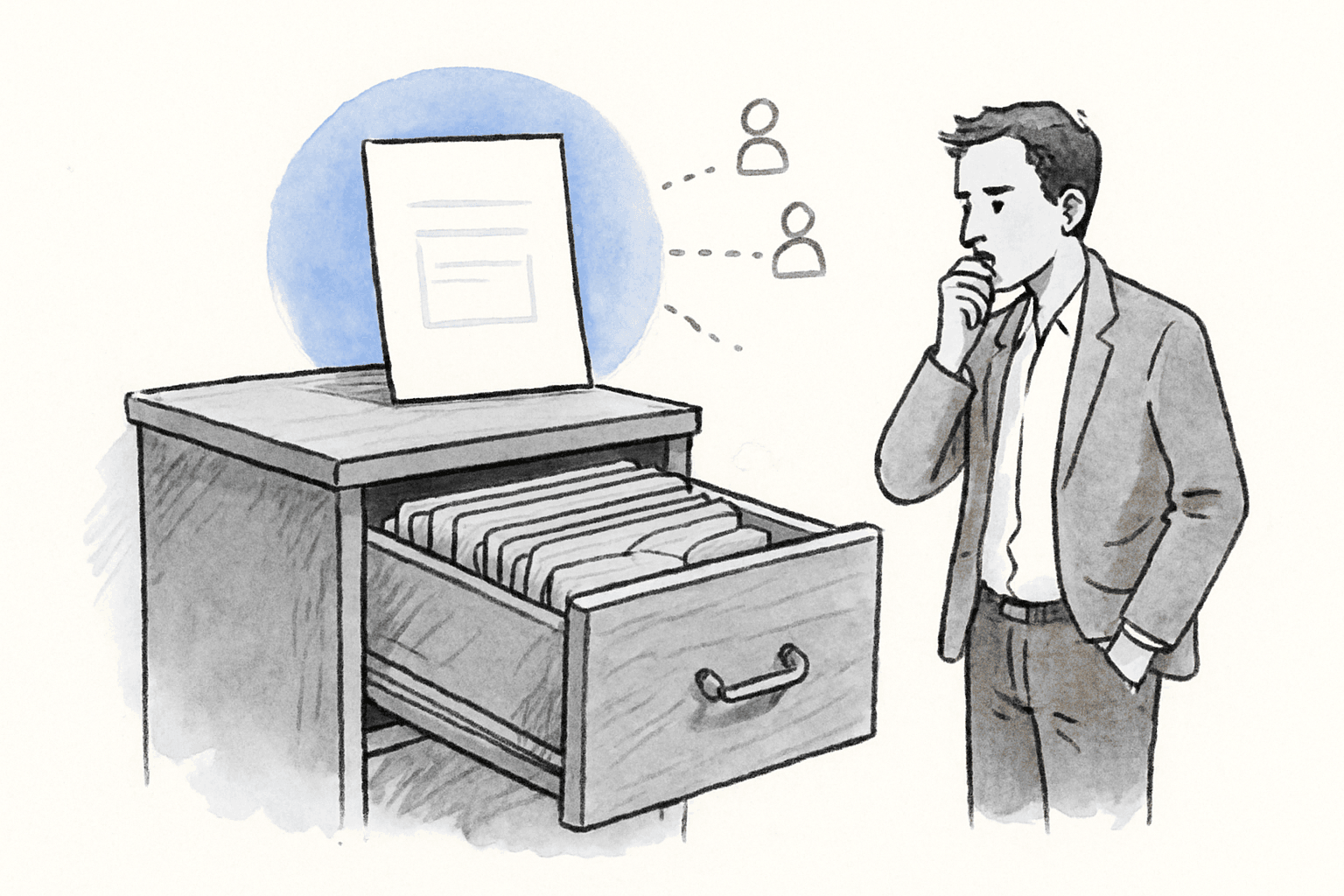
The website did not change. The depth lives in your team's heads and your back-office tools, not on any page a buyer can reach.
Why this is different from what you think it is
The owner usually frames this as a marketing problem. We need better SEO. We need a campaign. We need to be on LinkedIn. What it actually is is a positioning problem, and it is invisible because the team already knows the answer.
When a referral asks your sales rep what you do, the rep gives a forty-minute version. When the same referral lands on your site, they get the two-sentence version. The two stories do not match. The buyer reconciles by trusting the source they already trust (the person who referred them) and ignoring the site. Which is fine, until the next buyer arrives without a referral and has no way to bridge the gap themselves.
The fix is not louder marketing. It is a site that represents the business you actually are now, at the depth a buyer needs to make a decision.
The most common reason it fails
When we audit established-business sites, the catalog-trapped-in-a-brochure pattern shows up in a few recognizable ways:
- The services list is a summary, not a catalog. Four categories with one-paragraph blurbs. Nothing a buyer can use to compare what they need against what you offer. The information your reps have memorized never made it to the site.
- Configuration lives on the phone call. Your reps walk every prospect through the same set of options every time. None of that is on the site, so every prospect costs you a phone call to start the qualification a self-serve catalog could have started for free.
- Discovery questions never become product pages. The questions your reps answer in every intro call are the questions a prospect is searching for an answer to before they ever pick up the phone. Most of those answers are not on your site.
Why owners can't see the problem
The owner has been describing the business for years. He can describe it in any room, on any call. The depth feels obvious to him because he carries it around. He cannot see the gap between his explanation and his site because his explanation is always available to fill the gap in person.
You cannot see the silence your site is creating.
The marketing team, if there is one, usually cannot see it either. They were hired into the existing site structure and they update what they can update. Nobody on staff has the standing to say, the architecture of this site is wrong for what the business is now. That decision sits with the owner, and the owner is busy running the company.
What changes when the site matches the catalog

A client we engaged to do exactly this kind of repositioning had been in their industry for decades. They had real depth in their offerings, internal estimation tools their reps used, and a catalog they could rattle off from memory. None of that lived on the website. The site was a brochure with a contact form.
We worked with them on shifting the site toward a catalog model: actual product pages with the kind of detail their reps would give on a call, a configuration flow that prospects could explore on their own, and an internal-facing version of the same catalog their reps could pull up while talking to a customer. We relaunched the site around that structure rather than dropping the new content onto the old layout.
The surprising effect was internal. Their own reps started using the site as a sales tool, because for the first time the site knew what the reps knew.
Tests you can run yourself
Three quick checks to see whether your site is a brochure trapped inside a catalog business:
- Ask a rep to walk a stranger through your offerings using only your website. How many tabs do they open? How many things do they verbally fill in that the site does not say? Each verbal fill-in is a gap a self-serve buyer is hitting unattended.
- Pull the five most common questions your sales team answers in intro calls. How many of them have a clear answer somewhere on your site? If the answer is fewer than three, your discovery call is doing the site's job.
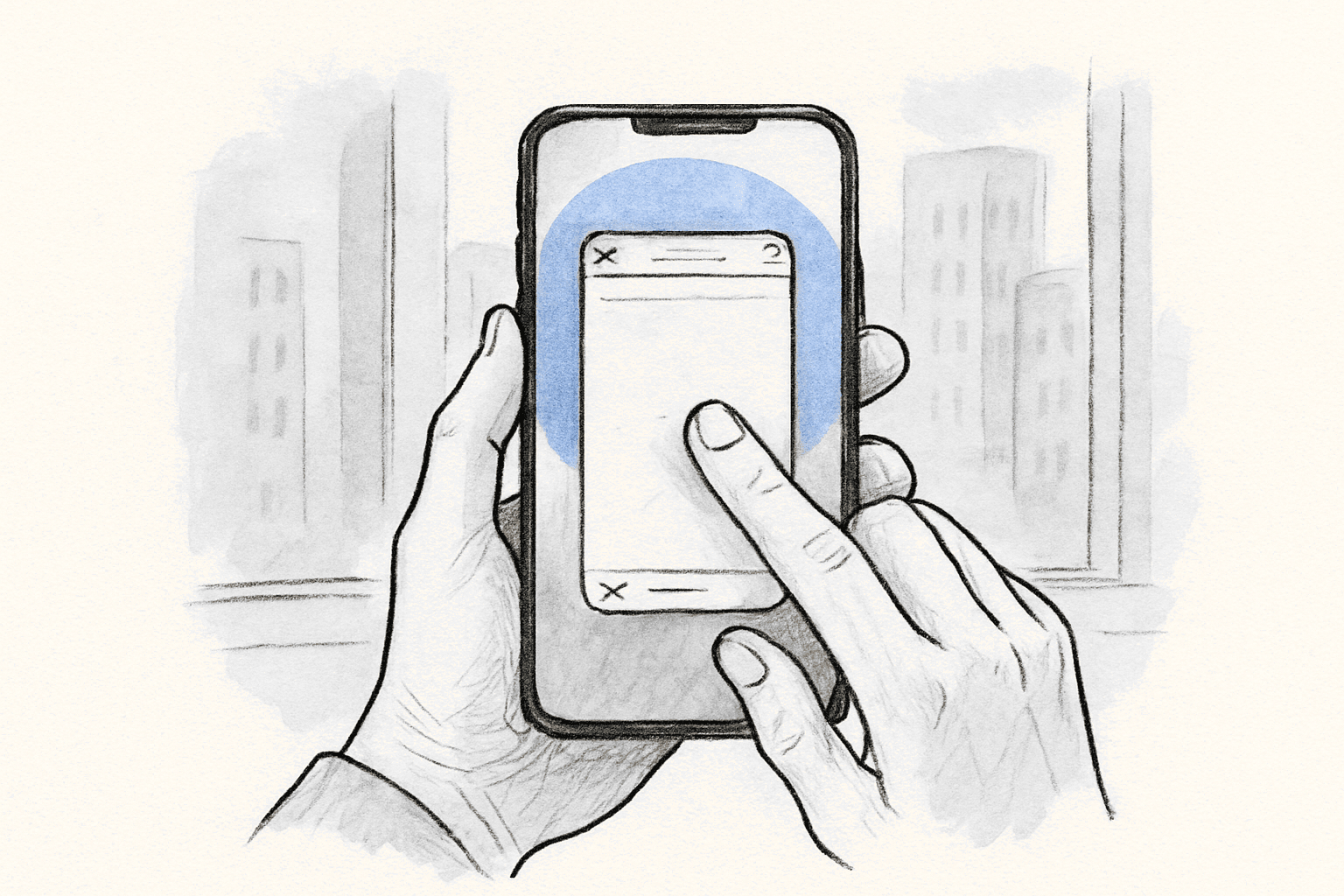
- Open your homepage on your phone and read it the way a stranger would. Within ten seconds, can you tell whether this company is a brochure, a service firm, or a catalog operation? If not, the buyer cannot either.
What I'd actually recommend doing about it
You do not need a full rebuild to start fixing this. Sometimes the fix is a single new section on the homepage that summarizes the depth that is currently hidden, plus a real services or catalog area underneath. Sometimes the fix is structural and bigger.
Either way, the first step is figuring out which of your business's depth the site is currently hiding, and where it is costing you. That is the kind of read we do for established businesses on a regular basis: where the site is keeping pace with the company and where it is not. The audit is free and usually surfaces a few obvious gaps in the first thirty minutes.
If that sounds useful, schedule a call and we will take a look.